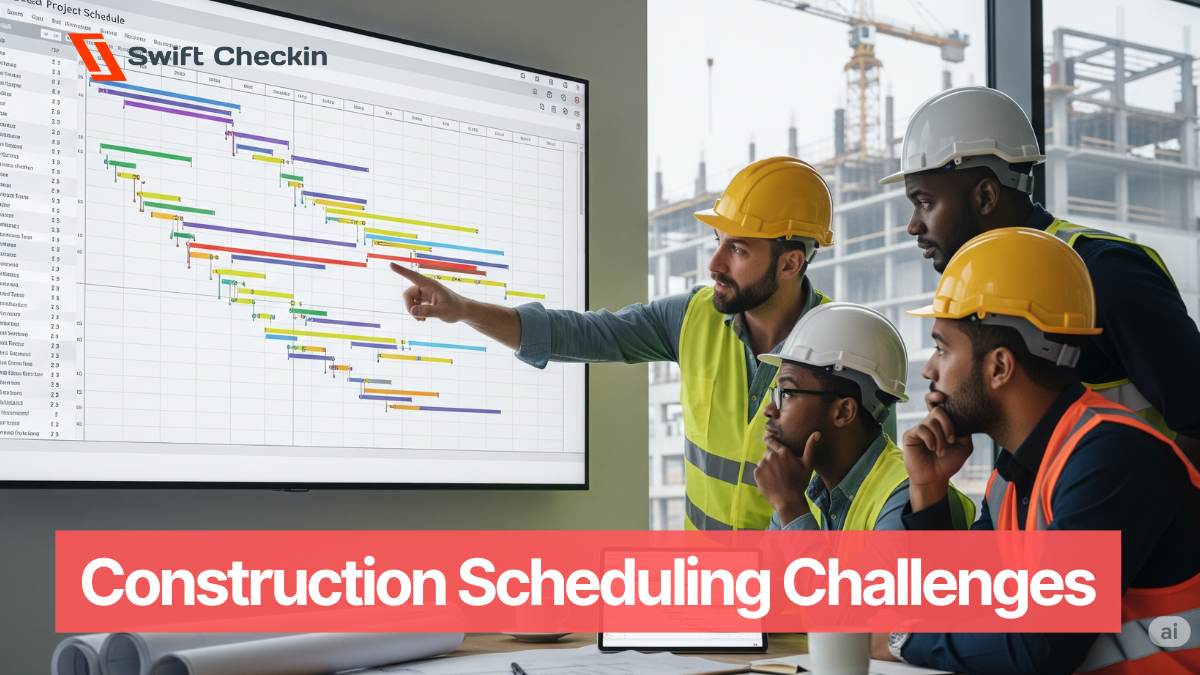
Construction schedules that looked solid on paper slowly unravel once the boots hit the ground. And in 2025, those delays feel even more common, more complex, and harder to control.
Between labor shortages, unpredictable deliveries, stricter compliance requirements, and tech that doesn’t always play nice. Keeping a project on schedule has become one of the biggest challenges facing contractors, site managers, and general builders today.
In this article, we’ll unpack what’s really causing 2025’s scheduling delays, how they impact your projects, and the practical steps you can take to get ahead—including easy-to-use scheduling tools that keep everyone on the same page.
Mckinsey and industry report show, large construction projects are coming in, on average, 20% late and 80% over budget. Thats a 100% (20%+80%) uncalled for.
That is even worse with mega projects. Only 2% of mega projects actually finish on time and within budget.
And if you think good planning protects you, consider this: by the time a project wraps up, about 30% of the original scheduling data is no longer traceable. Somewhere between kickoff and completion, one-third of the original plan is gone.
The industry is short nearly half a million (439,000) workers this year. That shortage hits hard on site, where foremen are forced to juggle overworked crews and chase subcontractors who are booked solid.
Every missing trade creates a domino effect, turning your schedule into gridlock. And it’s not just about people showing up—it’s about having the right people at the right time.
Material deliveries feel more like bets than bookings. You might have framing material on time but wait weeks for HVAC components. Coordination becomes a daily game of Tetris—and you’re always missing a few pieces.
One delay can ripple across weeks of work.
For all the talk of digital transformation, most teams are still halfway there. Some use spreadsheets. Some use legacy apps. Some still rely on whiteboards in the site office.
The result? Multiple versions of the truth. Missed updates. Conflicting timelines. And often, more confusion than clarity.
Today’s clients are asking for faster builds, smarter buildings, and greener materials—often at yesterday’s prices. Meeting these demands means juggling advanced systems, longer lead times, and a mountain of compliance checks.
It’s not that it can’t be done. It’s just that it needs breathing room and your schedule rarely has any.
Once a schedule slips, it doesn’t just affect the calendar.
Costs escalate. Crews are forced to rush, which often compromises quality. And when workers feel the squeeze, safety can take a back seat.
Then there’s the client side. A missed milestone might slide once—maybe even twice. But by the third time, confidence fades fast, and your reputation goes with it. Trust and reputation are closely tied to your schedules.
Cross-train your team. It won’t fix the labor gap, but it gives you options when certain trades are unavailable. And build lasting relationships with subs. Loyalty and trust go a long way when everyone’s busy.
Some contractors have even started sharing vetted labor during down times—a surprising shift, but it’s helping keep projects on track.
Perfection is a myth. Plans need to breathe.
Add buffers. Build fallbacks. And expect things to change. The difference between a delay and a disaster often comes down to whether or not you had a Plan B ready.
Weekly reforecasting based on real activity is more valuable than a rigid Gantt chart built six months ago.
Technology shouldn't be another task—it should remove tasks.
Skip the shiny objects and focus on tools that address your actual pain points. The best tools connect your site, office, and subcontractors with the same real-time picture. They let you adjust with confidence and see risks before they become emergencies. Real-time monitoring catches problems while they're still manageable.
Implement one thing at a time. Revolutionizing everything simultaneously is a recipe for chaos.
Yes, this costs money upfront. But it's pocket change compared to the financial bloodbath of extended delays.
The projects that are staying on track in 2025 aren’t necessarily the ones with the biggest crews or budgets. They're the ones with the best visibility. The ones where everyone, from the site lead to the subcontractors, knows what's happening, when it’s happening, and what’s changing.
That kind of clarity doesn’t come from guesswork or manually updated Excel sheets. It comes from using scheduling tools that are made for how construction actually works today.
Simple. Flexible. Connected. Just like Swift Checkin
Every delay tells a story and most of them start with either a missing piece of information, a missing person, or a missed opportunity to adapt.There’s no silver bullet for the industry’s challenges, but there are tools that make a real difference on the ground.
And if you’re still relying on a patchwork of calendars, messages, and memory to manage your site schedule, it might be time to upgrade.
You don’t need a complex platform. You need something built for you, that’s easy for your team to use and reliable enough to show you what’s really going on.
Tools like Swift Checkin are quietly helping contractors stay ahead—not by doing everything, but by doing what you need, right.
