How to Accurately Estimate Labour Costs for Construction Projects
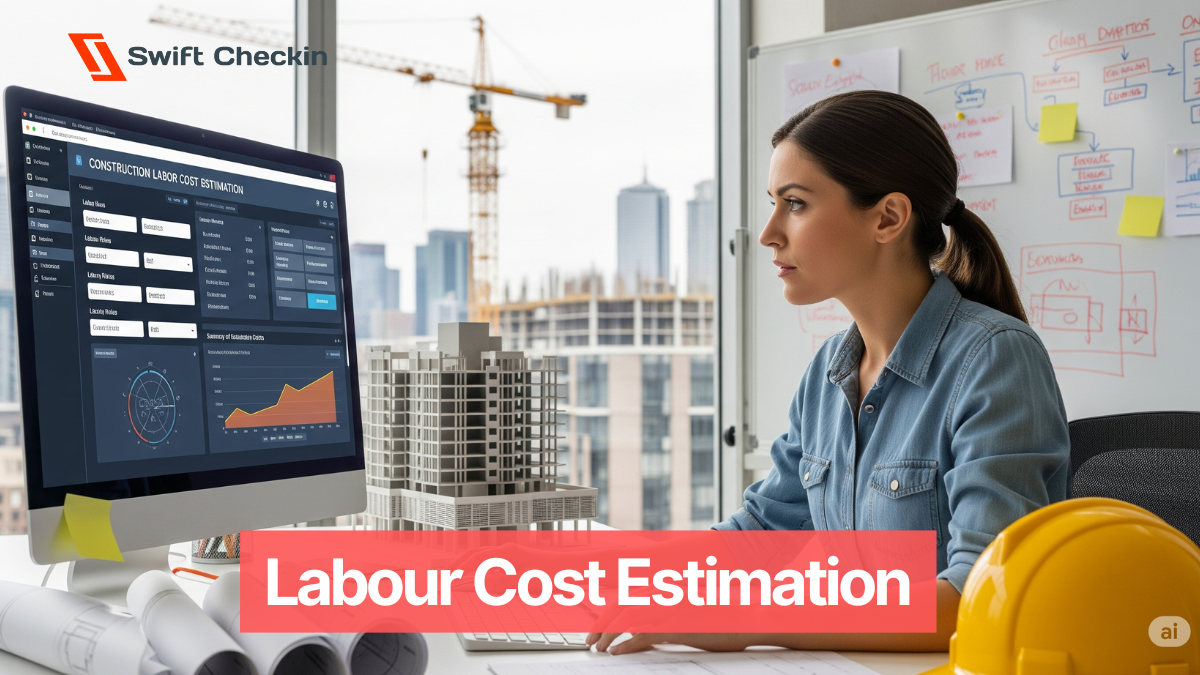
Let's be honest – labour cost estimation can make or break your construction project. I've seen contractors lose thousands because they underestimated by just 10%. On the flip side, overestimating means you might lose the bid entirely.
I've learned that labour costs aren't just about hourly wages. They're about understanding your crew, your project, the regulations and having the right systems in place to track everything accurately.
Why Most Labour Estimates Go Wrong
Before we dive into the how-to, let's talk about why this is so hard to get right. Labour costs typically eat up 30-50% of your total project budget. That's huge. And unlike materials, you can't return unused labour hours to the supplier.
The real challenge? Every project is different. Sure, you might have installed flooring a hundred times, but this time you're working in an occupied building with limited access. Suddenly, your productivity drops by 25%.
Breaking Down Your Labour Costs
Your true labour cost isn't just the hourly wage. Here's what you're actually paying for each worker:
- Base wage – What shows up on their paycheck
- Payroll taxes – Social Security, Medicare, unemployment
- Workers' compensation – Varies wildly by trade and location
- Benefits – Health insurance, vacation, sick leave
- Equipment and tools – Often forgotten but very real
- and the list goes on...
In most markets, these "burden" costs add 35-50% to your base wages. So that $25/hour electrician actually costs you around $37/hour.
Step-by-Step Labour Estimation Process
1. Study Your Plans Like Your Profit Depends on It (Because It Does)
Don't just glance at the drawings. Print them out, mark them up, and walk through the project mentally. I use different coloured pens for different trades. Yellow for electrical, blue for plumbing, red for HVAC.
Look for the gotchas – tight spaces, coordination-heavy areas, anything that'll slow your crew down.
2. Break Everything Into Bite-Sized Pieces
Instead of thinking "electrical work," think:
- 47 outlets to install
- 1,200 linear feet of conduit
- 3 panel changes
- 15 light fixtures
This granular approach prevents you from missing work or double-counting.
3. Know Your Crew's Real Productivity
Forget the textbook numbers. Your crew might be faster or slower than industry averages. Start tracking actual productivity on current jobs. That experienced electrician might wire 12 outlets per hour in open areas but only 6 per hour in tight crawl spaces.
Keep notes on every job. Weather, crew experience, site complications – all of it affects productivity.
4. Calculate Hours, Then Add Reality
Once you have your base hours, add buffers for real-world conditions:
- Setup and cleanup time
- Coordination with other trades
- Material delivery delays
- Weather delays (for exterior work)
- Learning curve on new techniques
I typically add 15-20% to my calculated hours. It sounds like a lot, but it's saved me countless times.
5. Apply Your True Hourly Costs
Use your actual burden rates, not estimates. If you don't know them, call your accountant today. Seriously. This one number can swing your estimate by thousands.
Common Estimation Mistakes (Learn from My Expensive Lessons)
- Underestimating coordination time – Your electrician can't work if the framer isn't done. Build in wait time.
- Forgetting about mobilization – Getting tools and materials to the job site costs time and money.
- Using last year's wage rates – Labour costs change fast, especially in hot markets.
- Ignoring overtime implications – That rush job might require 60-hour weeks at time-and-a-half rates.
The Digital Revolution in Labour Management
Here's where things get interesting. The old days of clipboards and spreadsheets are over. Digital workforce management is changing how we handle labour costs entirely.
Modern construction software doesn't just help you estimate – it tracks everything in real-time. Your crew checks in digitally when they arrive, logs what they're working on, and the system automatically calculates actual costs against your estimates.
Take Swift CheckIn, for example. While it focuses on workforce tracking rather than initial estimation, it provides the real-time labour cost control that most contractors desperately need. You can see immediately if a task is taking longer than estimated and make adjustments before small overruns become big problems.
The beauty of digital tracking is the data it creates. After a few projects, you'll have rock-solid productivity numbers for your specific crews under various conditions. That data makes your next estimate incredibly accurate.
Building Your Estimation Database
Start keeping detailed records today. Every project teaches you something about labour costs. Was the drywall crew 20% slower because of the cold weather? Did the new apprentice electrician drag down overall productivity?
Document everything:
- Actual hours vs. estimated hours by trade
- Weather impacts on productivity
- How crew size affects efficiency
- Site-specific challenges that slowed work
Tools That Actually Work
Forget the expensive software packages that promise everything but are incredibly complex for no reason. Start with tools that solve real problems:
- Digital takeoff software – Measure quantities directly from PDF plans. Way more accurate than scaling with a ruler.
- Wage rate databases – RSMeans or local contractor association data keeps you current on market rates.
- Time tracking apps – Even simple ones beat paper timesheets for accuracy.
- Project management platforms – The good ones integrate time tracking with job costing automatically.
The Real-World Check
Your estimate is only as good as your ability to track against it during the project. The most successful contractors I know treat estimation and job cost tracking as one continuous process.
They estimate carefully, track obsessively, and adjust quickly when reality differs from the plan. Digital tools make this possible in ways that weren't feasible even five years ago.
Making It All Work
Labour cost estimation isn't about finding the perfect formula. It's about building systems that help you learn from every project and get a little more accurate each time.
Start simple. Track your actual costs against estimates. Note what went wrong and what went right. Use digital tools to eliminate the guesswork in time tracking.
Most importantly, remember that labour costs are about people, not just numbers. Your crew's experience, motivation, and working conditions all affect productivity. The best estimates account for the human element, not just the math.
The contractors who consistently profit understand this: accurate labour estimation is part science, part experience, and part having the right tools to track what's really happening on the job site.



