Methods for Tracking and Improving the Labour Cost Percentage: The Single Most Critical Profit Metric
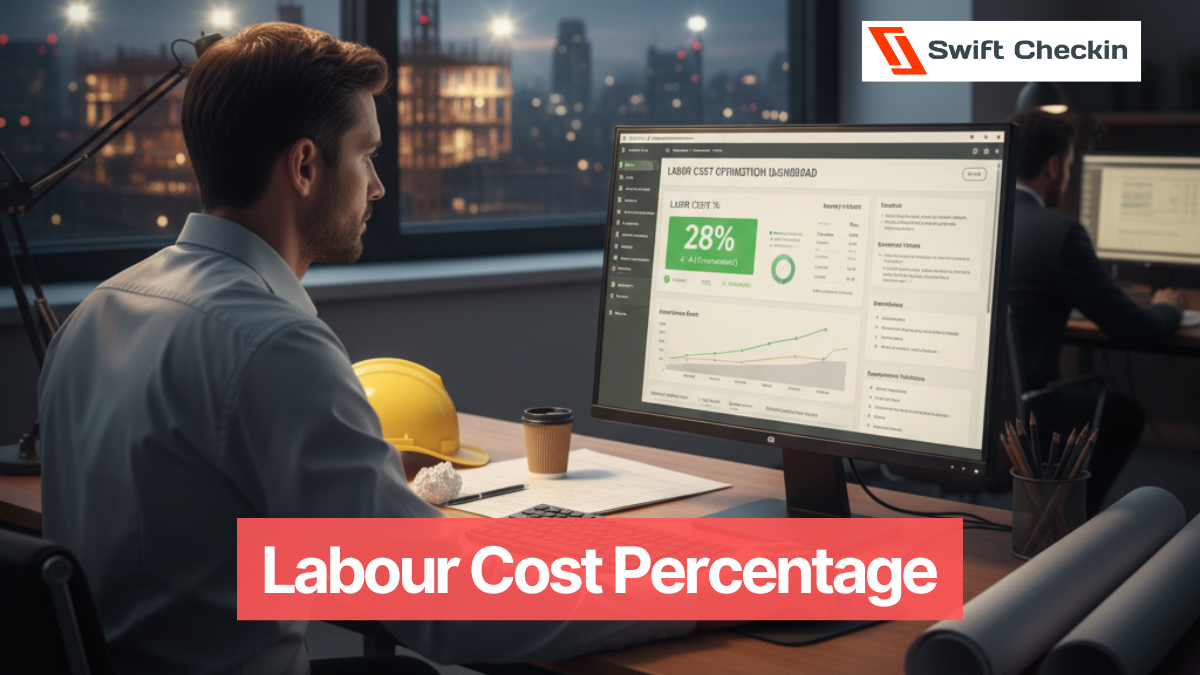
The single most impactful metric that defines the operational health and long-term viability of a construction firm is its labour cost percentage (LCP). This metric is not merely a number for the general ledger; it serves as the essential financial barometer for your field productivity. Ignoring its cadence is financial negligence.
For too many contractors, profitability feels abstract, a concept defined only by the final accounts. True control, however, rests in the proactive, continuous monitoring of LCP. Specifically, tracking this metric Year-to-Date (YTD) provides the empirical data needed to detect systemic inefficiencies and protect your fragile profit margins from silent erosion.
What Exactly is the Labour Cost Percentage (LCP)?
The LCP quantifies the total spending on labour against the revenue. It tells you what proportion of every dollar earned is consumed by wages.
The formula is straightforward:
LCP=Total Revenue (YT(YTD) / Total Burdened Labour Cost
The key to precision here is the numerator. It must be the Total Burdened Labour Cost. This figure includes not only gross wages but also the non-negotiable costs the employer incurs: payroll taxes, workers’ compensation premiums, superannuation, and health benefits. Tracking LCP against base wages alone offers a fundamentally misleading view, creating artificial headroom where none actually exists.
Why YTD Tracking is a Financial Imperative
Tracking LCP on a job-by-job basis is useful, but it can be deceptive. A single job might show an artificially high LCP early on because labour is front-loaded (e.g., demolition and foundation). Conversely, a job may look healthy right before a massive, unbudgeted rework phase spikes the cost.
The YTD approach smooths out these cyclical project peaks and valleys. It provides a reliable trend line for the entire portfolio. This holistic view is crucial for several reasons:
- Reveals Systemic Issues: A perpetually rising YTD LCP indicates deep-seated problems—perhaps chronic bidding inaccuracies, habitual overtime across all sites, or deficient company-wide scheduling practices.
- Validates Estimating: The YTD average validates whether the estimating department's assumptions about crew productivity and labour hours are realistic. If the YTD LCP is consistently higher than the budgeted target LCP, your bids are too thin.
- Predicts Cash Flow: By observing the LCP trend, management gains a reliable tool for forecasting future labour expenditures and managing cash reserves more accurately.
The Mechanism: Achieving Data Fidelity
The integrity of LCP hinges entirely on the quality and timeliness of the input data. You cannot measure, manage, or reduce what you cannot accurately track. Modern digital solutions are not optional; they are mandatory for achieving this level of financial fidelity.
1. Real-Time, Granular Data Capture
Manual, paper-based timesheets inject lag and error into the process. The core mechanism for improving LCP starts with mobile, validated timekeeping. Every hour must be captured as it is worked, not days later from memory. Solutions that require a site-verified, geo-fenced Swift Checkin eliminate "soft leaks" like buddy punching and rounding, which silently inflate LCP by small but catastrophic increments.
2. The Discipline of Job Cost Codes
The captured hours must be instantly and accurately tagged. LCP is useless if hours are simply marked "labour." They must be assigned to the correct job code and phase (e.g., "Job 451 – Task 3: Structural Steel Erection"). This granular coding allows you to quickly pinpoint where inefficiency is concentrated—is the problem the entire job, or just the foundation phase across three different projects?
3. Proactive Trend Visualisation
Accounting software and integrated field applications must present the YTD LCP on a continuous dashboard. The finance team needs to see a clear line: Budgeted LCP versus Actual LCP (YTD). If the actual line begins to creep above the budgeted line, it triggers an immediate, non-negotiable review. Early detection is the single most effective countermeasure against margin decay.
Practical Strategies to Pull Down an Elevated LCP
When the YTD LCP signals trouble, management must respond with targeted, data-driven interventions.
Control Overtime Proactively
Uncontrolled overtime is the most virulent spike to LCP. It is not just the 1.5x or 2.0x multiplier; it is the diminished productivity that often accompanies fatigued crews. Use time-tracking software to enforce a system of proactive authorisation. Alerts should be triggered when a worker approaches their 38th hour, forcing a project manager to approve the premium cost before the work is done. This simple governance structure transforms overtime from a budget surprise into a controlled exception.
Eliminate Rework's Financial Drag
Rework is, fundamentally, labour that is double-billed. It represents hours spent correcting work that should have been right the first time. The labour cost associated with rework (including the demolition and clean-up) has zero corresponding earned value, spiking the labour cost percentage violently. Lowering LCP requires investing in rigorous quality control checks and ensuring every task is signed off before the next trade is mobilized.
Optimise Crew Cadence and Flow
An elevated LCP can stem from idle time caused by scheduling clashes or material delays. Use the job cost data from the timekeeping system to identify low-productivity periods. If the concrete crew is logging four hours of waiting time, the LCP for that activity suffers. Improving LCP requires tightening the operational flow—ensuring materials are staged correctly, subcontractors are sequenced effectively, and site constraints are managed before they lead to expensive crew downtime.
Fortify the Estimating Feedback Loop
The LCP is the ultimate report card for the estimating department. If the YTD LCP consistently exceeds the initial estimate, the estimate is faulty. Use the empirical data generated by the timekeeping and job costing systems to refine future bids. By incorporating the true burdened rates and historical productivity rates, future bids become grounded in operational reality, making your target LCP achievable rather than aspirational.
Conclusion: The LCP as Your Strategic Compass
The labour cost percentage is not merely an accounting variable. It is a profound indicator of your firm’s operational discipline. Successful contractors monitor it daily, respond to deviations weekly, and adjust their strategy based on the YTD trend.
By insisting on granular, real-time tracking, you install an early warning system that protects the bottom line from the relentless pressure of rising costs. Make the commitment now: treat the LCP as your most valuable strategic compass. Only then can you move beyond hoping for profit to actively guaranteeing it on every single project.



