Best Practices for Project Cost Control in Construction: Guaranteeing Profit Delivery
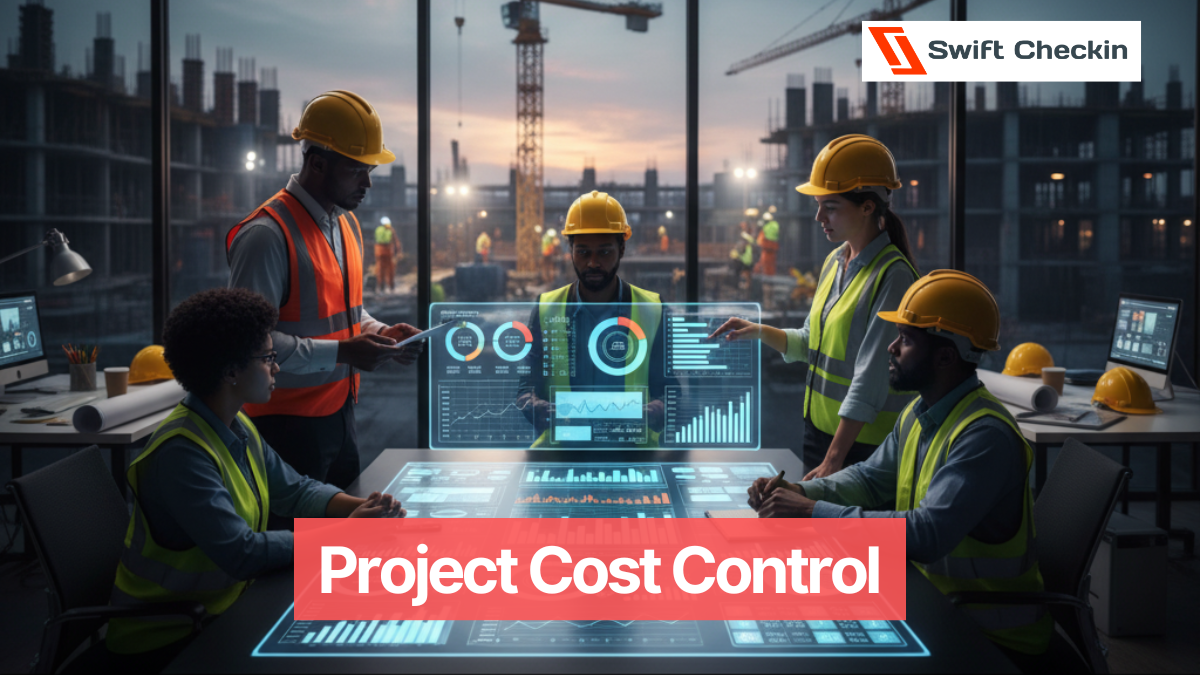
The construction industry operates under the constant shadow of the statistic: approximately 70% of projects face cost overruns. This is not an accident of fate but a predictable consequence of inadequate management systems. In an industry where margins are often razor-thin, every deviation from the budget attacks the bottom line with surgical precision.
Effective project cost control is therefore not merely a defensive tactic. It is the essential, proactive mechanism that ensures your carefully estimated profit is actually delivered. It requires discipline, transparency, and, critically, speed. Contractors must replace reactive firefighting with a system that identifies risks before they materialise as expenses.
Cost Control Versus Cost Management: Understanding the Distinction
To implement effective controls, we must first clarify the terminology. Many use the terms interchangeably, but they represent distinct phases of financial discipline:
- Cost Management: This is the strategic, long-term function. It happens before and during the project. It involves resource planning, estimating, budgeting, and establishing the baseline. It is the architectural blueprint of your financial success.
- Cost Control: This is the tactical, execution-focused function. It happens during the project. It involves measuring performance against the established baseline, analysing variances, and taking immediate corrective action. This is the daily steering that keeps the ship on course.
You cannot achieve robust control without first establishing rigorous management practices.
Top Best Practices: Establishing the Framework for Control
Effective project cost control is anchored by foresight and continuous measurement. These are the practices that must be baked into your operations.
1. Thorough Planning and Baselines
The quality of execution can never exceed the quality of the plan. This requires a detailed cost estimate tied directly to the Work Breakdown Structure (WBS). The plan must include realistic contingencies—not just a lump sum, but reserves specifically allocated to known risks. Establishing the official cost baseline—the approved, time-phased budget—is the non-negotiable starting point against which all subsequent performance is measured.
2. Earned Value Management (EVM) for Performance Measurement
EVM is the most sophisticated tool for objective performance analysis. It integrates cost, schedule, and scope to answer one critical question: What is the value of the work actually completed?
Instead of just comparing Actual Cost (AC) to Planned Value (PV), EVM introduces Earned Value (EV). This allows calculation of Cost Performance Index (CPI). If your CPI is less than 1.0, you are spending more than the value earned. This metric provides a clear, quantitative signal demanding managerial intervention. It cuts through subjectivity.
3. Frequent Cost Reviews and Active Forecasting
A monthly cost report is a historical document; it’s far too late to affect change. Reviews must be frequent—ideally weekly or biweekly. These aren't just report-reading sessions. They are active forecasting sessions. Project managers must update their Estimate At Completion (EAC), which is their honest projection of the final cost based on current trends. This forecasting discipline keeps the team focused on the future impact of today's performance.
4. Clear Approval Workflows and Thresholds
Financial leaks often begin with the erosion of approval discipline. Establish clear approval thresholds: small dollar items can be approved by the foreman; medium amounts require the project manager; large expenditures need the executive. This governance structure enforces accountability. It ensures that every expenditure is reviewed against the budget before the commitment is made.
The Integration Imperative: Linking Cost to Labour
The single largest challenge to successful project cost control is the data lag between the field and the finance office. Labour, being the largest controllable expense, must be tied instantly to the overall project health.
Cost control requires the dimension of time. Every labour hour logged must be automatically categorised by:
- Job Code: Which contract or project consumed the time?
- Activity Code: Which specific WBS task was being performed?
- Cost Type: Was the time Ordinary or premium Overtime?
Automated timekeeping, using site-verified systems, acts as the crucial data source. When field data (like a Swift Checkin) feeds directly into the accounting and project management systems, you achieve immediate, granular visibility. This means the overall project cost controller receives instant alerts when the labour budget for a specific task—say, "Concrete Slab Pouring"—exceeds its planned value, allowing intervention within hours, not weeks.
Critical Pitfalls to Avoid: Silent Profit Killers
Controlling costs is as much about avoiding common mistakes as it is about implementing best practices.
- Ignoring Scope Creep and Missing Change Orders: Uncontrolled scope creep is the deadliest project killer. If the client requests additional work, it must be documented immediately, priced accurately, and approved before execution. Failure to submit change orders for executed work results in absorbed cost—a direct hit to your profit.
- Small Deviations Compounding: Do not ignore a 5% labour overrun on a task because "it’s small." These minor deviations across multiple work packages are what accumulate into a catastrophic end-of-project overrun. The rule is simple: investigate every negative variance that exceeds a set threshold (e.g., 10%).
- Poor Stakeholder Communication: Cost reports are often confined to the accounting office. Key data must be communicated clearly and regularly to foremen, site supervisors, and subcontractors. They are the tactical decision-makers who need to know their current financial standing to control their own work.
Tools and Techniques for Cost Management
Modern project cost control is impossible without robust integrated software. The days of using disparate spreadsheets for time, accounting, and project management are over.
The most effective systems are those that integrate procurement (ensuring materials are purchased at budget rates), accounting (calculating the true burdened labour cost), and project execution (tracking field hours and progress).
Conclusion: A Discipline of Proactive Governance
Effective project cost control is not magic; it is the discipline of proactive governance applied daily. It requires adopting a mindset where cost data is treated not as a historical record, but as the essential tool for real-time risk mitigation.
Rigorously establish a comprehensive cost baseline, leverage Earned Value Management to measure performance objectively, and integrate all financial inputs. Especially labour data captured accurately via tools that demand a verified check-in empowers your teams to manage the project to its profit target. StoStop waiting for the final report to reveal failures; instead, use Swift Checkin to actively ensure success.



