Subcontractor Time Tracking Best Practices: Ensuring Invoice Accuracy and Protecting Profitability
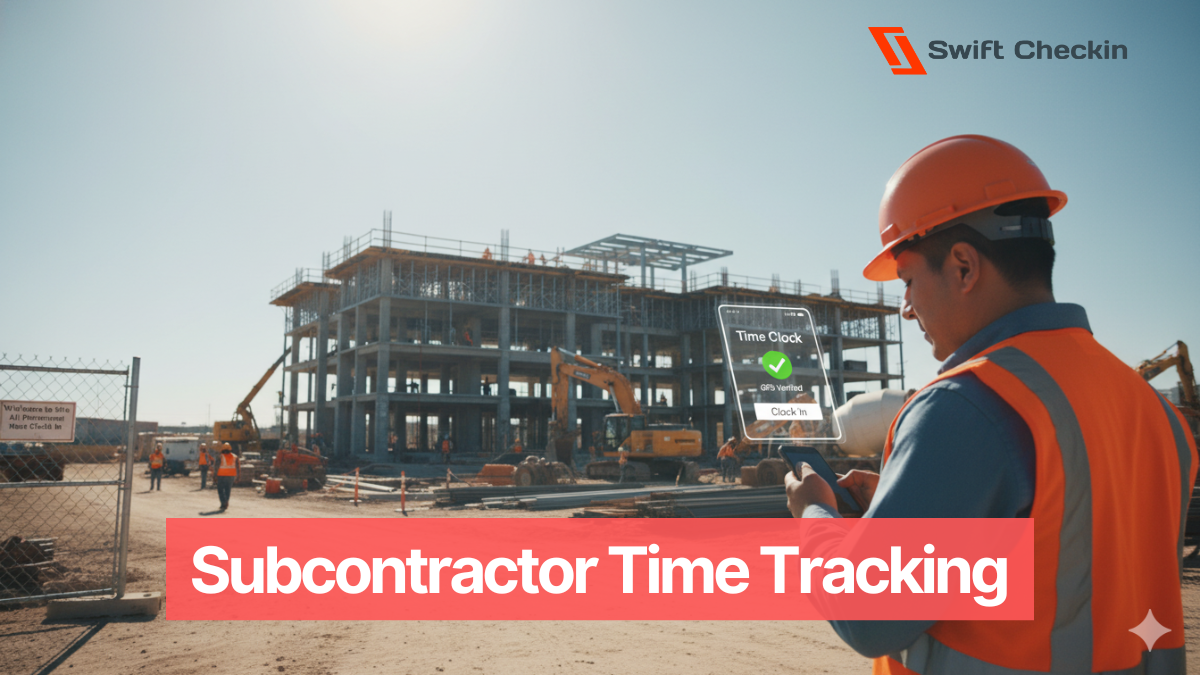
The delicate balance of profit and loss in construction hinges on the granular details of subcontractor time tracking. Labour charges represent a significant financial vulnerability. Unverified hours, inaccurate reporting, and retrospective reconciliation quietly erode margins and ignite costly disputes. The objective is to implement robust subcontractor hour verification best practices that guarantee invoice accuracy and fundamentally protect project profitability.
It ensures every dollar paid for construction labourer wages directly corresponds to verifiable, productive work performed on-site.
Why Labour Hour Verification is Non-Negotiable for Profitability
Without rigorous verification, a project faces structural financial vulnerabilities:
- Invoice Inflation: Paying for unperformed hours or time dedicated to non-billable activities.
- Cost Misallocation: Hours incorrectly assigned to the wrong cost code, skewing project financials and hindering accurate job cost accounting for construction.
- Delayed Dispute Resolution: Arguments over billed hours becoming protracted, impacting cash flow and relationships.
- Eroding Trust: A lack of transparency breeding resentment between main contractor and subcontractor.
Subcontractor Hour Verification Best Practices: The Definitive Checklist
Implementing a system that ensures the integrity of subcontractor hours is a strategic need for every contractor. Here are the actionable best practices:
1. Implement Digital, Geo-Verified Time Tracking
- The Problem: Manual timesheets are easily manipulated, prone to error, and lack real-time validation.
- The Solution: Mandate the use of subcontractor time tracking software integrating GPS tracking. This confirms the worker is physically on the designated job site at clock-in and clock-out.
- Impact: Buddy punching is eliminated, off-site clock-ins are prevented, and payments cover only verifiable, on-site time. This is the foundational step for undeniable invoice accuracy.
- Example: A general contractor on a $5M project saved an estimated $12,000 annually by implementing geo-verified time tracking for four main subcontractors, primarily by eliminating 5-10 minutes of daily "off-site" time per worker.
2. Enforce Granular Cost Code Allocation at Clock-In
- The Problem: Subcontractors submitting broad hour categories (e.g., "Site Work") obscure true labour allocation and project performance.
- The Solution: The digital time tracking system must require workers or their foreman to select the specific cost code or activity before clocking in. These codes must align directly with the primary job cost accounting for construction codes.
- Impact: Every hour is categorised correctly and immediately. This provides unparalleled visibility, preventing mis-allocated costs from distorting budgets and enabling precise variance analysis.
- Example: By requiring precise cost code allocation, a contractor identified a concrete sub was spending 15% more hours on "Formwork Stripping" than budgeted. Early insight allowed investigation and renegotiation of future scope, saving $7,500.
3. Establish Real-Time Overtime Pre-Authorisation Workflows
- The Problem: Unapproved overtime is often billed retrospectively, forcing premium payments for unplanned work.
- The Solution: Integrate an overtime approval workflow directly into the subcontractor time tracking software. If a worker attempts to log hours triggering overtime rates, the system sends an immediate alert for digital approval before the work is performed.
- Impact: Overtime shifts from a budget surprise to a controlled, authorised expenditure. This is an indispensable practice for protecting fixed-price contracts from unexpected surges in construction labourer wages.
- Example: A commercial builder estimated saving $300-$500 per week across active projects by preventing unapproved subcontractor overtime through mandatory real-time digital approval.
4. Mandate Daily Digital Time Sheet Submission and Approval
- The Problem: Weekly or bi-weekly paper timesheets are subject to recall bias, lost documentation, and delayed discrepancy identification.
- The Solution: Require subcontractors to submit digital timesheets daily, with immediate digital sign-off from the site supervisor or Project Manager.
- Impact: Daily verification drastically reduces errors, captures accurate data while memory is fresh, and allows for instantaneous correction of discrepancies. This proactive approach prevents small errors from compounding into large disputes and streamlines the payment cycle.
- Example: Moving to daily digital sign-offs for a carpentry subcontractor reduced invoice dispute resolution time by 70%, from an average of 3 days to less than 1 day, improving cash flow and relationships.
5. Implement Automated Reporting and Variance Alerts
- The Problem: Manually sifting data to identify cost overruns or anomalies is time-consuming and often too late.
- The Solution: Configure the subcontractor time tracking system to generate automated daily or weekly reports comparing actual hours against budgeted hours for specific cost codes. Set up automated alerts for any variance exceeding a predetermined threshold (5% or 10%).
- Impact: This provides continuous financial oversight. Project managers are notified of potential overruns as they happen, enabling immediate intervention. This is the ultimate tool for proactive job cost accounting for construction.
Conclusion: Proactive Verification for Predictable Profit
The era of trusting unverified paper timesheets for subcontractor labour is over. The financial pressures of modern construction demand a more rigorous, objective approach. By implementing these subcontractor hour verification best practices centred around intelligent subcontractor time tracking software, operations transform fundamentally.
This shift ensures irrefutable invoice accuracy and shields profitability from hidden leakages. Achieving this level of precision requires tools engineered for the field, such as a Swift Checkin system that integrates geo-verification and cost codes seamlessly.



