Importance of Accurate Timekeeping in Labour Cost Management: The Bridge to Job Cost Accuracy
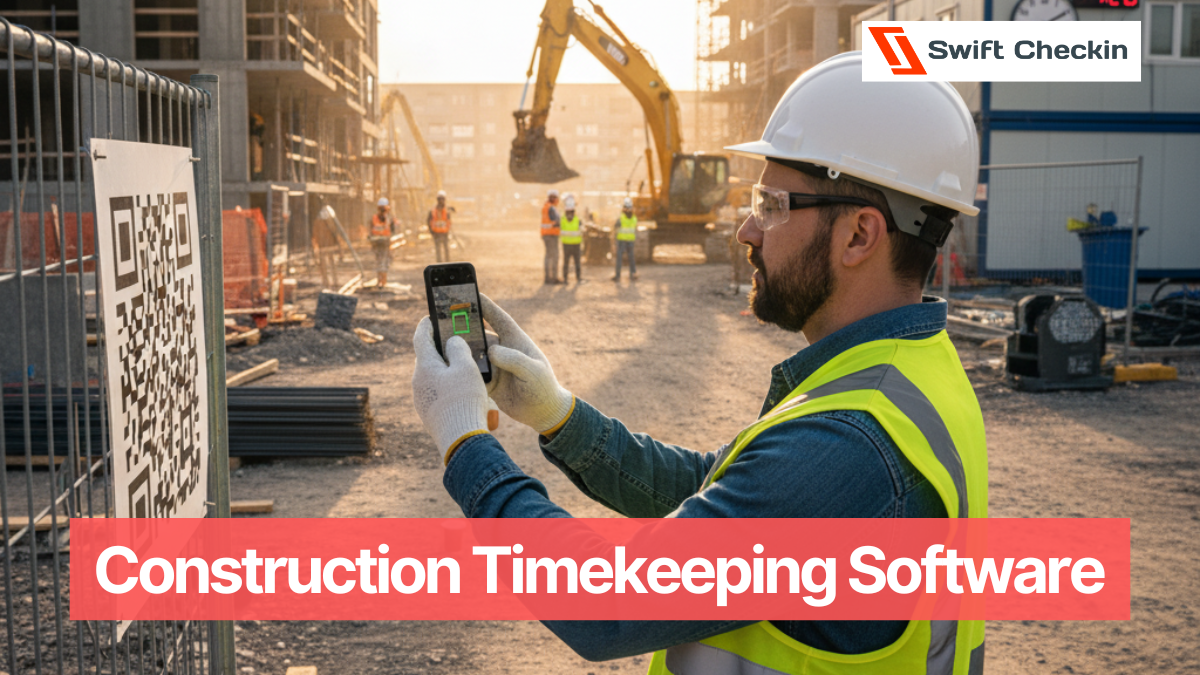
Profit in the construction industry is not found. It is meticulously built. Yet, even the most sophisticated budget, planned down to the cent, is rendered irrelevant the moment inaccurate time data leaves the job site. The truth is, labour cost management is wholly dependent on timekeeping. And if the clocking system is faulty, every downstream financial report, from payroll reconciliation to final job costs, will be flawed.
For decades, the industry was looking for solutions around this risk of relying on paper, spreadsheets, and human recollection. That era is over. Today, the integrity of your project’s margin is directly tied to the performance of your construction time keeping software. It serves as the indispensable link between the physical work performed in the field and the stringent financial discipline required in the office.
The Latency Trap: Why Manual Timekeeping Fails
The failure of traditional time tracking is rooted in three persistent pathologies that erode profitability:
- Financial Latency: Time data recorded on paper on Tuesday is often not processed into payroll until the following Friday. This creates a financial blind spot of several days, during which cost overruns, particularly overtime, are incurred, compounding silently and becoming irreversible.
- Human Error and Recall Bias: Workers are prone to rounding hours for convenience, and supervisors must often interpret illegible entries. This inherent error rate, typically estimated at 1% to 8% of total payroll, is pure leakage straight from the bottom line.
- Lack of Verification: Without GPS stamps or photo verification, the system is susceptible to abuse, notably "buddy punching," where a non-productive employee is paid for time they did not perform. This is theft of services, and it directly inflates job costs.
These issues render traditional timekeeping a reactive exercise. Modern construction time keeping software fundamentally shifts this dynamic, enabling proactive control.
Core Capabilities: The Software-Driven Workflow
A robust timekeeping platform must integrate capabilities that address the physical realities of the construction site while satisfying the stringent needs of finance. Its primary role is to enforce accuracy at the point of action.
1. Real-Time Location Verification (Geofencing)
The system transforms the traditional punch clock into a geofence-validated digital entry point. Workers are restricted to clocking in only when their mobile device's GPS confirms they are within a defined perimeter of the site. This single capability eliminates time fraud and buddy punching instantly. It provides irrefutable data that the work commenced precisely where it was needed, protecting the budget from non-productive pay.
2. Enforced Job Code Discipline
Accurate job cost accounting relies on the field crew allocating time not just to the project, but to the specific activity (e.g., Formwork, Electrical Rough-in, Concrete Pour). Timekeeping software ensures that time is logged against a predefined, synchronised list of job codes from the office budget. This eliminates guesswork and ensures that every minute is tied to a measurable, budgeted task. It is the only way to generate a reliable Cost Performance Index (CPI) mid-project.
3. Proactive Overrun Alerts
Overtime is a predictable consequence of scheduling drift. A top-tier application is configured with award rules (e.g., 8 hours in a day, 40 hours in a week). When a worker approaches these thresholds, the software triggers real-time alerts to the Project Manager. This mechanism forces management to authorise premium pay before it is incurred, effectively locking the gate against profit leakage and enabling immediate corrective scheduling action.
Bridging the Gap: JCA and Payroll Integration
The highest value of construction time keeping software lies in its ability to connect the typically siloed operations of the field, the finance department, and payroll.
Accurate Burdened Rate Calculation
As explored in a supporting blog, the true cost of labour involves the burdened rate—the base wage plus Superannuation, Payroll Tax, and Workers’ Compensation. Manually calculating these liabilities for every hour, especially factoring in the complex rules surrounding premium overtime pay, is a nightmare of complexity. The software automates this. It applies the correct tax and burden rules to the time and job code, delivering a fully costed, compliance-assured figure directly to the Job Cost Accounting system.
Auto-Timesheeting for Swift Payroll
The reconciliation process, the review, adjustment, and approval of timesheets is the final bottleneck in the manual system. Modern applications digitise the entire approval flow. Supervisors review and sign off on digital timesheets instantly, and the validated data is exported directly into the payroll system. This seamless payroll integration eliminates administrative waste, freeing up accounting staff and ensuring statutory compliance is met with zero delay.
The Operational Edge: Achieving Predictive Control
By implementing an accurate, reliable timekeeping system, contractors gain more than just a reduction in clerical work; they gain a decisive operational edge:
- Real-Time Variance Analysis: With clean, coded data flowing continuously, Project Managers can run daily comparisons of estimated versus actual labour hours, allowing them to pinpoint and correct inefficient crews or workflow failures within hours, not weeks.
- Enhanced Compliance: All time records, approvals, and location data are stored digitally, creating an unassailable audit trail. This is essential for defending against compliance checks or employee wage disputes.
- Improved Cash Flow Forecasting: Accurate time tracking allows for more precise forecasting of labour expenses in the next pay cycle. This provides financial managers with superior visibility for managing cash resources.
Conclusion: The Mandate for Accuracy
In construction, your profit is not a result of grand strategic decisions made in the boardroom. It is the cumulative result of thousands of small, accurate decisions made daily on the job site.
The ability to manage labour costs and calculate precise job costs hinges entirely on the integrity of the time data. By adopting high-precision construction time keeping software, speculation replaces verified fact. You transition from a company that absorbs cost overruns to one that prevents them.
To secure this level of clarity and control, contractors need a solution that prioritises field usability and financial fidelity. Systems featuring robust GPS verification, enforced job coding, and seamless payroll integration are mandatory. A solution built on the concept of a fast, verifiable, time data is Swift Checkin, the most powerful step you can take to make your profit predictable and guaranteed.



