Using Construction Time Tracking Software to Reduce Overruns: The Path to Predictive Profit
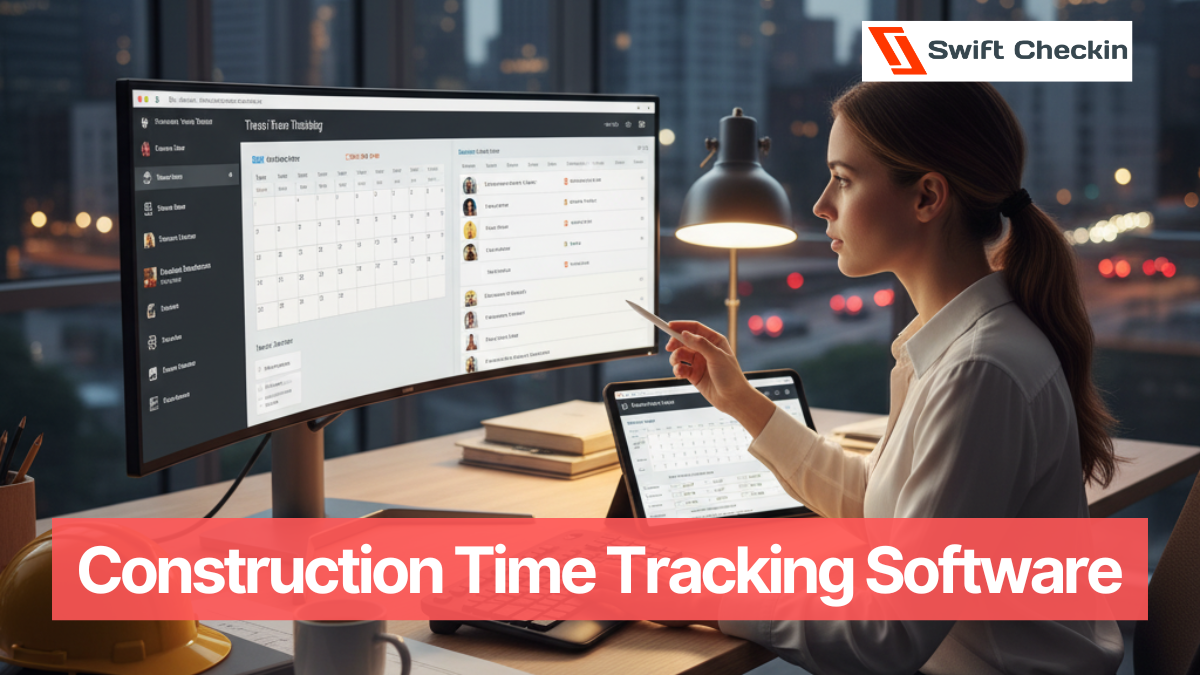
Labour is, without exception, the single most volatile and high-risk expense on any construction project. It's the cost that contractors have the most control over, yet it is often the one that slips away first. While materials and equipment can be tightly scheduled, human time is fluid, complex, and frustratingly prone to leakage.
For too long, contractors have relied on the deeply flawed system of paper timesheets, manual entry, and delayed payroll processing. This creates a time lag, a financial blind spot, that effectively hides cost overruns until the money is already spent.
The shift to modern construction time tracking software is not merely an upgrade from paper. It is the fundamental bridge that takes meticulously planned profit and moves it from the theoretical world of the budget into the realised world of your bank account. This is the mechanism that turns a reactive business model into one built on real-time, proactive financial control.
The Overtime Epidemic: A Silent Profit Killer
When contractors think about cost overruns, they often envision a sudden, expensive material change or a weather delay. But the silent, chronic killer of margin is unapproved overtime.
Overtime is devastating because it doesn't just increase costs; it multiplies them. When you pay a crew member time-and-a-half, a 50% is immediately added to their already costly burdened rate. This premium pay is the purest form of profit leakage, and it often hides deeper systemic issues:
- Scheduling Failure: Overtime frequently results from poor sequencing, material delays, or coordination bottlenecks. This force crews to work late to meet an artificial deadline.
- Poor Productivity: It can mask inefficient crews who needed extra hours to complete a task that should have been finished within the standard workday.
This compounding effect means a small 5% overrun in materials might equal $5,000. But a 5% labour overrun, much of it comprising premium pay, can easily double that financial hit. Controlling overtime is not an efficiency goal; it is a profit imperative.
Mechanism 1: Proactive Overtime Management—The Real-Time Shield
The fundamental flaw of paper-based time tracking is latency. By the time a Project Manager or Controller reviews a handwritten timesheet on Friday, the premium hours worked on Tuesday have already incurred the full, irreversible cost. The control function is dead.
Construction time tracking software instantly transforms this vulnerability into a shield through proactive authorization.
- Real-Time Alerts: The system is configured to recognise project-specific, contractual, and regulatory limits. As a worker approaches 40 hours, or perhaps 8 hours on a single day, the platform sends a real-time alert to the supervisor.
- The Power of Authorization: This alert forces the decision to be made before the premium cost is incurred. The manager must actively approve the overtime, justify it, and assign the cost to the correct job code. This process stops managers from unconsciously drifting into high-cost territory. It introduces the discipline of cost-benefit analysis at the point of action.
Mechanism 2: Eliminating Time Fraud and Leakages
Beyond catastrophic overtime, profit is eroded daily by smaller, insidious forms of fraud and leakage that paper timesheets not only allow but encourage.
The End of "Buddy Punching" and Rounding
"Buddy punching," where a coworker clocks in for an absent colleague, and arbitrary rounding are silent killers of efficiency. e.g., rounding 7 minutes up to 15. These minor actions chip away at your margin consistently.
Modern construction time tracking apps enforce accountability:
- Location Verification: Tools like Swift Checkin log time with a GPS-verified stamp to ensure the worker is physically on the correct job site. If a worker attempts to clock in from a location outside the geo-fence, the entry is automatically flagged or denied.
- Minute-by-Minute Precision: The software tracks time to the second, eliminating all rounding errors. Over the course of a large project with dozens of workers, recovering even 5 minutes of unearned pay per worker per day generates massive savings. The app acts as a digital sealant against these daily, persistent leakages.
Mechanism 3: Data Integrity and Job Code Discipline
The value of tracking hours is zero if those hours cannot be accurately allocated to the right financial bucket. Poor job-code discipline undermines the entire Job Cost Accounting system. This leads to cost cross-subsidisation, where a profitable job covers a failing one.
- Enforced Coding: Time tracking software mandates that workers or supervisors assign hours to a pre-defined list of job/activity codes at the point of check-in. This makes coding intuitive and error-proof.
- Audit Trail: Every hour recorded is tied to a specific worker, time, location, and task. This creates an unassailable audit trail, providing the precise data necessary for accurate variance analysis—allowing you to compare planned vs. actual labour costs for the electrical rough-in, not just "all labour."
The Unavoidable ROI: Administrative Savings and Accuracy
The true return on investment for construction time tracking software often begins with the simplest equation: recapturing lost administrative time.
The cost of manual processing—collecting illegible timesheets, chasing supervisor approvals, manually entering data into payroll, and reconciling errors—is a massive hidden operating expense. By enabling auto timesheeting, the software handles the validation, collation, and transfer of data seamlessly to your accounting and payroll systems. Office staff are instantly freed from hours of clerical work and can redirect their focus toward the higher-value strategic analysis that actually defends profit.
To justify the investment, a contractor typically needs to reduce their total labour waste (from error, fraud, and inefficiency) by less than 1%. Given that manual processes often allow leakage of 5% to 10% or more, the ROI is usually rapid and substantial. You're not just buying software; you are buying financial accuracy and proactive control.
Conclusion
Labour cost overruns are not an inevitable cost of doing business. They are a direct consequence of managing 21st century projects with 20th century tools. The detailed and rigorous techniques required to defend profit, from burdened rate integrity to proactive overtime control, are simply impossible without construction time tracking software. This technology transforms the financial operations from a reactive monthly review into a real-time, real-time dashboard.
By securing every minute with Swift Checkin, you gain the clarity to make immediate, data-driven decisions that ensure the profit you planned for is the profit you ultimately earn.



