How to Manage Cost Codes Effectively for Project Cost Control
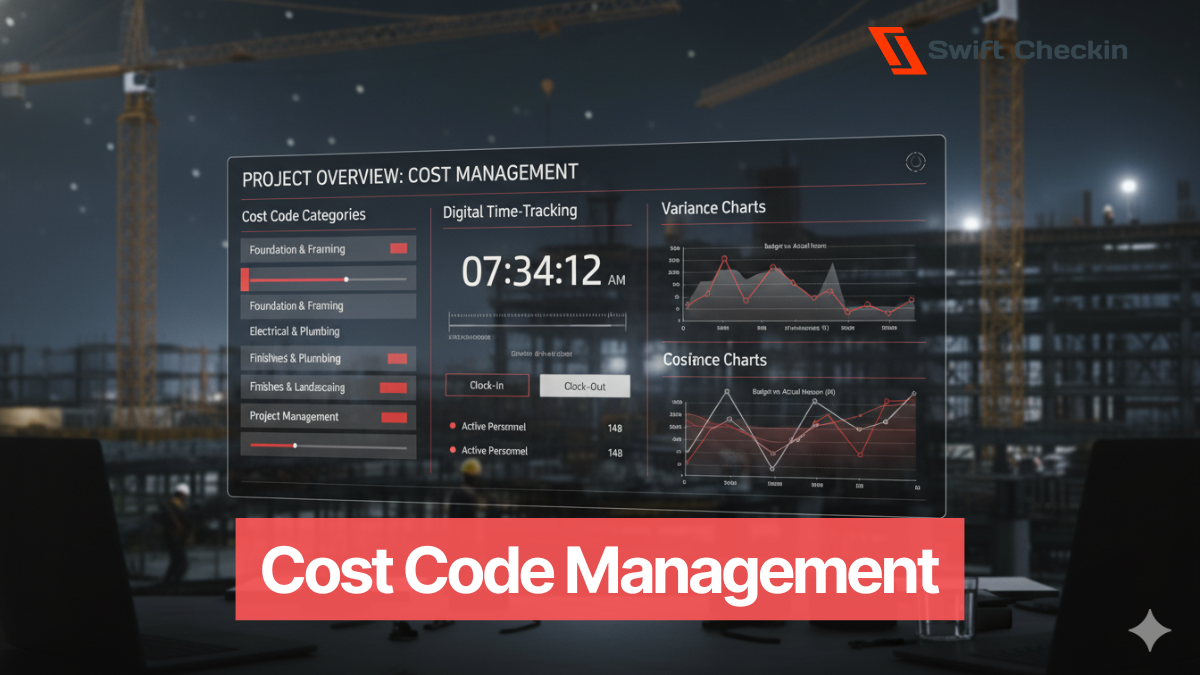
The cost code is not just a random number in an accounting system. It is the fundamental language of profitability in construction. Mismanaged, it leads to financial ambiguity, inaccurate bidding, and critical budget overruns. Mastered, it becomes the sharpest tool for achieving proactive project cost control and generating immediate, actionable business intelligence.
Effective cost code management demands a unified system from the estimating phase to final reconciliation. This guide outlines the lifecycle, ensuring everyone from the estimator to the foreman to the accountant is aligned on the data required to protect the project margin.
Phase 1: Preparation and Standardisation
The power of a cost code begins long before ground is broken. The structure of the cost code must be defined, logical, and fully aligned with your organisational needs.
- Establish a Universal System: Standardise on a system like CSI MasterFormat or your internal classification, but ensure consistency across all projects. Do not allow Project Managers to invent codes on the fly. Consistency is the bedrock of comparative analysis.
- Granularity for Control: Codes must be granular enough to flag problems but simple enough for field crews to select quickly. A code for "Drywall Installation" is necessary, but a sub-code for "Drywall Installation - Level 5 Finish" provides the precision needed to track premium labour costs. Excessive complexity, however, leads to field compliance failure. Find the fine line between them.
- Link Code to Budget: Every single line item in the estimate must be tied to a unique cost code. The budgeted amount for that code is your definitive benchmark for comparison. If the estimate for Code 09290 (Drywall) is $25,000, that code holds the financial boundary for all labour, material, and equipment associated with that activity.
Phase 2: Execution and Data Capture
This is the phase where discipline makes profit or cost shock visible in real life. The goal is to enforce mandatory, accurate, and real-time cost code application by field teams and subcontractors.
- The Power of the Digital Clock-in: Reliance on paper timesheets destroys cost control. Modern construction cost control relies on digital time tracking that forces immediate, mandatory code selection. When a worker clocks in, the system must require them to select the job and the specific cost code for the activity they are about to perform.
- Enforcing Subcontractor Compliance: Subcontractor hours are the largest vulnerability. Their time tracking must be managed through the same system. Verification must include the specific cost code to prevent paying for general 'site labour' that should have been billed against a specific, budgeted task.
- Real-Time Validation of Hours: The digital system must confirm not just the total hours worked. But also indetify which codes consumed those hours. This ensures that a crew does not clock 90% of its time against a low-budget code. By this Project Managers are able to identify resource misallocation as it happens, not weeks later during a reconciliation audit. This immediate data flow is essential for effective construction cost control.
Phase 3: Analysis and Action
Once accurate data is captured and tagged with the correct cost code, the focus shifts to using that intelligence to drive timely corrective action and refine future bids.
- Variance Analysis by Code: The primary function of job cost accounting is to generate variance reports. These reports must be delivered daily or weekly, showing: Budgeted Cost vs. Actual Cost for every single cost code. A variance alert on a code means the budget boundary has been broken, demanding immediate investigation.
- Targeted Forecasting: Accurate cost code tracking allows for predictive analysis. If Code 07420 (Siding Install) is 50% complete but has already consumed 65% of its budgeted labour hours, the system can instantly generate a revised Estimate At Completion (EAC). This insight allows management to shift resources proactively, change procurement methods, or initiate a change order, turning a projected loss into a controlled outcome.
- The Audit Trail: Every transaction, from material receipts to subcontractor invoices, must reference the definitive cost code. This creates an unshakeable audit trail, essential for resolving disputes, justifying Change Orders, and satisfying tax and client inquiries.
The Unifying Mechanism for Cost Code Mastery
Effective cost code management cannot rely on fragmented spreadsheets and delayed hand-offs. The entire process requires a unified digital mechanism that enforces discipline from the field inward.
The ideal solution is engineered to simplify the complex task of data entry while guaranteeing its accuracy. It utilises GPS to verify site presence and a clean, mandatory interface to ensure the correct cost code is selected every single time. This automatic data flow from the site directly into the accounting ledger eliminates clerical error, accelerates reporting, and provides the timely, reliable intelligence needed for high-stakes project cost control. Tools that automate these critical steps, such as a Swift Checkin transform the complex challenge of cost code management into a simple, non-negotiable step in the daily workflow.



