What Is a Cost-Loaded Construction Schedule and How It Transforms Project Management
In construction, staying on time and on budget is a challenge. It’s no surprise then that large-scale projects often run 20% over schedule and up to 80% over budget.
Why is this happening? Because schedules and budgets are still managed in silos. And when time and cost don’t talk to each other, problems slip through the cracks.
That’s where cost-loaded construction schedules make the difference. When time and cost data live in the same place, project teams gain visibility, control, and better outcomes without guessing.
What is a Cost-Loaded Construction Schedule?
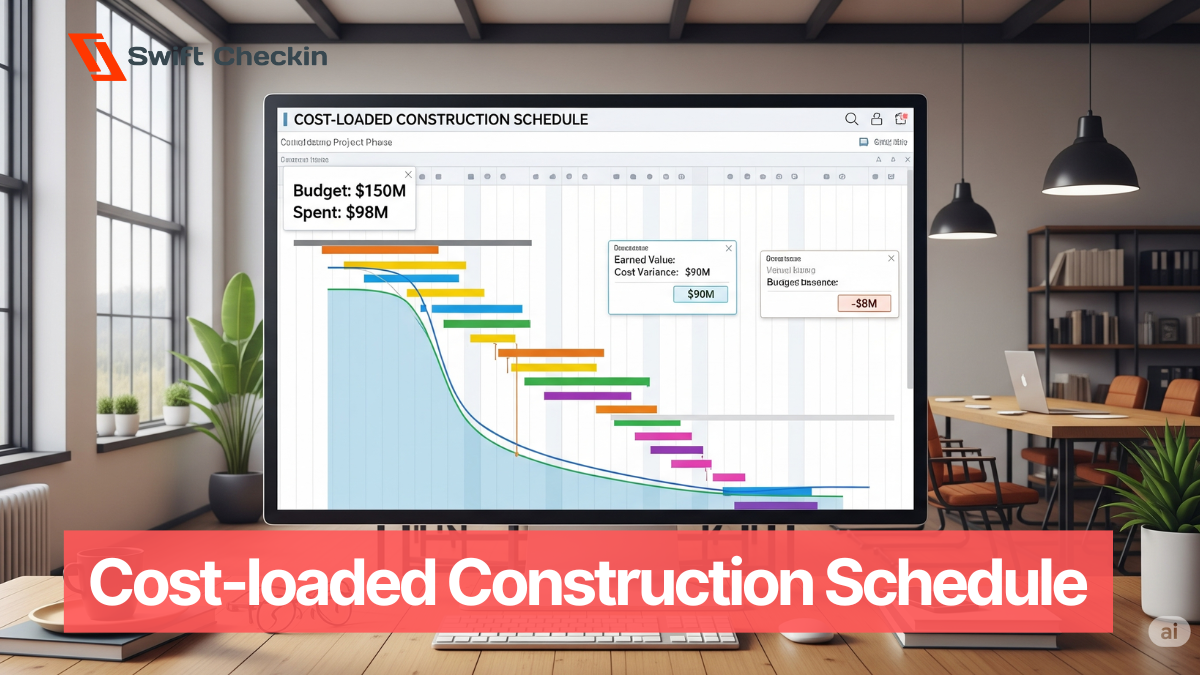
A cost-loaded schedule is a project timeline that includes both the duration of each activity and its associated cost.
Think of it like your standard Gantt chart—but with cost data attached to every task. So instead of just seeing “Excavation: 5 days,” you’ll see “Excavation: 5 days, $18,500.”
That added layer of cost data turns your schedule into a more powerful tool for managing project performance, forecasting cash flow, and aligning field and office teams.
Benefits of Cost-Loaded Schedules
Financial Awareness, Built In
Most scheduling tools show progress. Cost-loaded schedules show financial progress. You know what’s being spent and when across every scope of work.
This gives project managers the insight they need to spot overages before they become change orders or claims.
Clear Cash Flow Forecasting
Owners and contractors alike benefit from better visibility into when money is going out. A time-phased, cost-loaded schedule helps align billing cycles, secure timely funding, and avoid cash shortfalls mid-project.
Faster Decision-Making
When a delay hits, you're not just thinking about how it shifts your schedule but also about the financial impact. A cost-loaded schedule lets you calculate how a one-week delay affects downstream costs, enabling informed decisions under pressure.
Why Cost-Finance Integration Matters
The key takeaway: When schedules and budgets are integrated, they become a proactive management tool—not just a record of what went wrong.
How to Build Cost-Loaded Scheduling (Step by Step)
1. Start with a Solid WBS
Begin with a clear Work Breakdown Structure (WBS). Break your project into work packages or activities as you normally would.
Only this time, you’re planning with both time and cost in mind from the start.
2. Apply Accurate Cost Data
Each activity should have real cost data assigned—based on scope, labor, materials, subcontractor quotes, and equipment rates.
This includes:
- Direct labor (including burden)
- Subcontractor fees
- Material and equipment costs
- Indirect and overhead costs (if relevant)
Start with estimates, refine as quotes come in.
3. Sync Costs with Schedule
Once costs are added, layer them into your schedule. Now, your project plan reflects what’s happening in both time and money.
This builds a cash flow curve that evolves in real-time as work progresses.
4. Add Realistic Contingencies
No job runs perfectly. Build in contingency allowances, both in time and cost, at the task level. Avoid padding the end of the schedule with lump sums. Spread buffers where they’re most likely needed.
Today’s Scheduling Tools Make It Easier
In the past, this level of detail required juggling multiple tools—spreadsheets, project schedules, financial reports—and manually keeping them aligned.
Now, modern construction platforms allow you to connect cost, schedule, and field updates in one system.
The most important thing? Choose a tool your team can actually use. It doesn’t have to be overloaded with features. It needs to be clear, flexible, and designed for how your teams already work.
Common Pitfalls to Watch For
Chasing perfection upfront
Don’t wait to start until every cost is finalized. Use realistic ranges and improve as your project develops.
Overcomplicating the schedule
If field teams can’t understand or update the schedule, it won’t get used. Simplicity is key.
Failing to maintain it
A cost-loaded schedule is only valuable if it’s updated regularly. Treat it like a living document, not a one-time setup.
The Bottom Line: Visibility = Control
Cost-loaded construction schedules bring one simple but powerful benefit: visibility.
When you see how time and cost interact across your project, you’re no longer reacting to problems—you’re getting ahead of them. And in a world where missed deadlines and cost overruns are the norm, visibility is essential.
If your team is still managing costs in one system and schedules in another, it’s time to connect them. The result? Better decisions, fewer surprises, and stronger project performance from day one to closeout.
Ready to bring more visibility into your projects?
Because in 2025, the difference between a good project and a great one is clarity.



