Labour Cost Control Techniques for Fixed-Price Contracts: Protecting Your Profit Margin
In the world of fixed-price contracts, the rules of engagement are clear: the contractor shoulders all the risk. The bid promises a specific outcome for a specific price, making the pre-determined profit the fragile prize you must defend daily.
The single biggest threat to that profit, repeatedly, is uncontrolled labour costs. Labour is the most volatile, complex, and high-impact variable. A 5% swing in material costs might hurt, but a 15% labour overrun can wipe out the margin entirely.
Mastering labour cost control on fixed-price jobs requires a strategic mindset that operates in three distinct phases: Pre-emptive estimating, daily operational discipline, and ruthless change order management. This guide breaks down the essential techniques to ensure profit translates from paper to the bank.
Phase 1: The Pre-emptive Strike—Controlling Costs in the Estimate
Labour cost control doesn't begin on site; it starts with the integrity of the initial bid. If the estimate is flawed, the profit is lost before the shovel hits the dirt.
Why Burdened Rates Must Dictate the Bid
The most common estimating mistake is pricing labour using only the base wage. As we know, the true cost of an hour includes the burdened rate—employer taxes, insurance, benefits, and statutory costs.
For a fixed-price contract, you must be forensic in this calculation. Beyond applying the full burdened rate to every hour, non-productive time also needs to be factored in—the essential but non-billable hours spent on safety meetings, site inductions, and daily travel to the worksite. If the estimate doesn't accurately reflect every dollar and minute the worker costs, the contract is already underbid, and you are starting the race already behind.
Factoring in the Productivity Gap
Estimating software often relies on ideal-world productivity rates. The reality is that site conditions, crew turnover, and coordination issues create a productivity gap. For fixed-price work, apply a specific, historical adjustment factor.
A contractor who knows their concrete crew averages 90% of the stated industry norm for form-work hours can price the job realistically. If you price at 100% productivity and the crew achieves 90% , that delta 10% comes straight out of your pocket. Use the Job Cost Accounting history to inform a pessimistic, accurate productivity factor—it's the only way to build a robust profit buffer.
Phase 2: The Daily Defence—Implementing Operational Discipline
Once the contract is signed, the fight to control labour costs shifts entirely to the field. This phase is about real-time measurement and immediate correction.
Locking Down Hours with Real-Time Data Capture
In a fixed-price environment, paper timesheets are a liability. They introduce latency and errors that hide cost overruns until it's too late. The essential technique is daily, precise time capture tied directly to the Work Breakdown Structure (WBS).
Crews must use mobile applications for a quick check-in, ensuring hours are logged against specific job codes and tasks (e.g., Framing - Level 2 Exterior Walls, not just Framing). This instantaneous data flow allows project managers to see if the crew is tracking over budget on a specific activity by the end of Monday, rather than discovering the failure during Friday's payroll run. Real-time measurement enables real-time correction.
Strategic Resource Allocation and Skill Matching
Efficiency is profit on a fixed-price job. This demands go far beyond simply having "enough" workers. Practice strategic resource allocation.
- Skill Matching: Only deploy high-wage, highly-skilled tradespeople for the tasks that absolutely require their expertise. Using a master carpenter for basic tasks is a direct and unnecessary premium expense.
- Sequencing and Flow: Use pull planning techniques to sequence trades for maximum flow, minimising bottlenecks where one crew's idle time forces another crew into high-cost overtime later. Idle time is pure loss, and it’s a direct attack on a fixed-price profit.
Controlling and Flagging Overtime Premiums
Overtime is the profit's biggest enemy under a fixed-price model because it compounds the burdened rate with premium pay. The technique for control is proactive authorization.
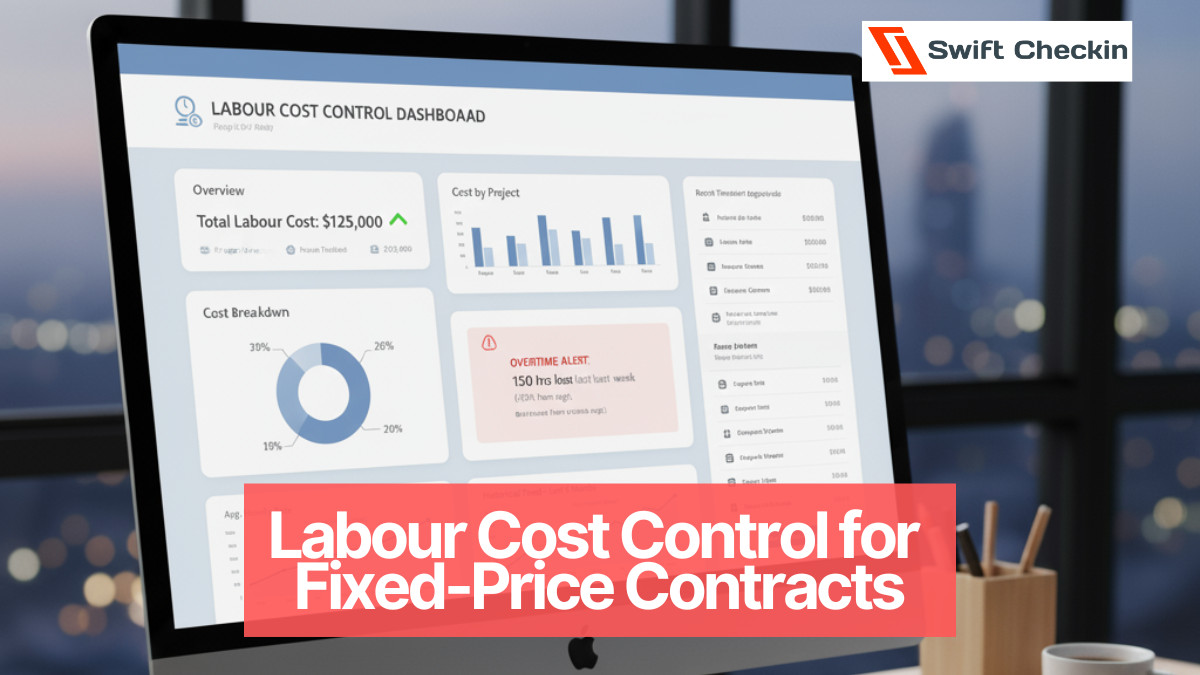
Implement a system where Project Managers receive real-time alerts when a crew or individual approaches a contractual hour limit. This forces the decision maker to approve the premium cost before the work is performed. When overtime is required, it must be assigned to the most critical path task, justified, and logged immediately so the cost can be absorbed by the JCA system without delay.
Phase 3: Mitigating the Profit Killers—Rework and Changes
If the estimate is the plan and daily management is the execution, then rework and scope creep are the devastating, unbudgeted bombs that destroy fixed-price profitability.
The Zero-Tolerance Policy for Rework
Work that must be redone due to error, damage, or poor initial quality is a total loss. Apart from paying twice for the labour, the rework disrupts the schedule, forcing other trades into delays or overtime.
A successful fixed-price contractor must implement rigorous quality checkpoints (QC) tied to payment milestones. Supervisors must be empowered to stop work immediately if quality standards are compromised. The cost of stopping work to correct an issue is always lower than the cost of discovering that issue after two subsequent trades have built upon the mistake.
Treating Change Orders as New Mini-Projects
Under a fixed-price contract, every client change request must be treated as a new, entirely separate contract. The technique here is discipline: never proceed with a change without a signed, documented cost/time impact statement.
The new estimate must include:
- The full burdened labour cost of the new work.
- The cost of disruption to the existing, original schedule.
- Any premium costs incurred to get back on track.
Failure to accurately and immediately capture the cost of a change order ensures that the uncompensated work will bleed the profit from the original, fixed contract.
The Holistic View: Forecasting and Continuous Improvement
The final layer of control requires constant look forward. Use the daily data generated from labour tracking to calculate the Estimate-to-Complete (ETC) weekly. If the ETC trend shows signs of exceeding the budget, you must trigger a corrective action plan immediately.
This data also feeds back into the pre-emptive phase. Every fixed-price contract, whether successful or failed, should be a lesson. Analyse the final labour performance reports to refine standard estimate templates, making next bid not just competitive, but defendable.
Conclusion
Profitability on fixed-price contracts is not a hope; it is the inevitable outcome of daily, disciplined cost management. All the careful estimating and strict governance that needs to be implemented depends entirely on accurate, instantaneous data from the field. That’s why the single most powerful technique you can implement is the Swift Checkin.
This rapid, location-verified time capture validates every hour against the budget, the moment the shift begins, transforming paper-based delays into real-time alerts that immediately close critical profit leaks.



