The Role of Labour Cost Management Software in Overtime Control
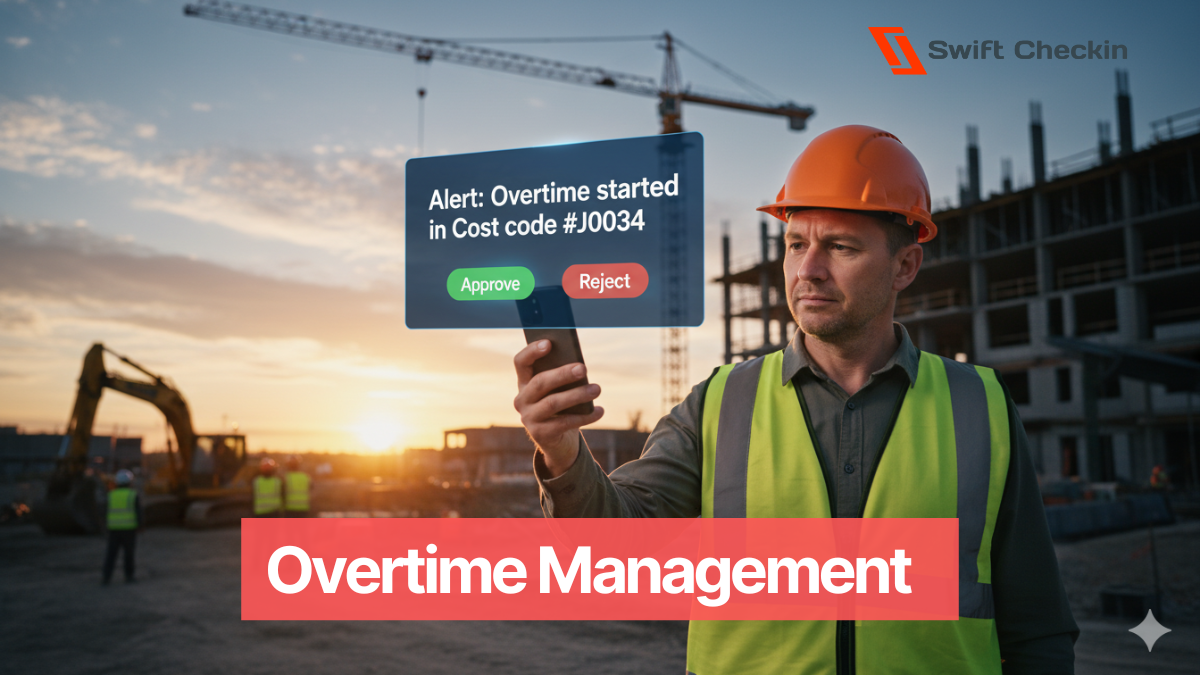
Uncontrolled overtime is the silent killer of project profitability. It is often treated as an unavoidable cost of aggressive scheduling. But the impact extends far beyond the premium pay—it damages margins, erodes worker welfare, and compromises quality. Effective overtime management brings control to your hands by capturing field data in real-time. This capability is delivered only by dedicated labour cost management software.
The True Impact of Unmanaged Overtime
Overtime must be analysed through three critical lenses: financial, ethical, and quality. A failure in one area guarantees failure in the others.
1. Financial Shock and Erosion of Profit
The most immediate damage is the non-linear increase in overtime cost. Paying 1.5times or 2times the base wage means that every hour worked during a premium period delivers significantly less value per dollar spent.
- Cost Creep: If a project relies on 10% overtime, the effective labour rate rises by 5% to 10% across the entire duration. On a $10 million project where labour constitutes 30%, this margin leakage translates to a $30,000 to $60,000 unrecoverable loss.
- The Burden Effect: The higher wage also triggers increased proportional costs in workers' compensation and payroll taxes, amplifying the financial shock.
2. Ethical and Compliance Exposure
Excessive or mandatory overtime places undue stress on the workforce, leading to burnout and poor morale.
- Fatigue and Safety: Studies consistently link fatigue to on-site incidents. A worker operating beyond an eight-hour shift is demonstrably more susceptible to error and injury. This increases the risk of claims and potential project delays, creating an ethical lapse in duty of care.
- Compliance Risk: Failing to calculate correctly or pay the appropriate premium rates for overtime cost leaves the contractor vulnerable to audits, fines, and class-action litigation. Which adds punitive damage to existing financial losses.
3. Decline in Quality and Productivity
Long hours inherently result in diminishing returns. After 40 hours, and certainly beyond 50 hours, a crew's productivity drops precipitously.
- Rework Risk: Fatigue is a direct precursor to mistakes. The higher the overtime, the greater the likelihood of needing costly rework. Another non-billable expense that comes out of the pocket.
- Reduced Focus: Complex tasks requiring precision suffer the most. The extra hours paid for at a premium are often the least productive, fundamentally undermining project quality and schedule adherence.
Proactive Overtime Management Through Construction Tech
The solution to mitigating these risks is not manual oversight but strategic automation. Labour cost management software provides the necessary technical controls to shift overtime management from a reactive audit to a proactive approval system.
Digital Pre-Authorization Workflows
The most effective control point is enforcing approval before the premium hour is worked. The software must implement a hard stop. If a worker clocks in for an hour that triggers an overtime cost, the system immediately flags the shift. The site supervisor must then provide digital pre-authorization, tied to a specific reason code (e.g., "Critical path deadline," "Weather delay mitigation"). This accountability structure eliminates unauthorised labour cost accumulation.
Real-Time Budgetary Alerts
The system continuously compares clocked hours against the project's labour budget for that week. If a crew is projected to trigger overtime based on its existing shift pattern, the software generates an automated alert hours or even days in advance. This predictive functionality allows Project Managers to adjust schedules, shift tasks, or move resources, averting the overtime cost instead of just paying for it later.
Geo-Verified Time Integrity
The foundation of any honest calculation is accurate time data. By leveraging GPS, labour cost management solutions ensure that every hour paid, especially premium time, is verified as having occurred on-site. This eliminates buddy punching and the padding of hours, ensuring that the substantial investment in overtime is applied only to actual, productive, verifiable work.
Conclusion: Shifting the Focus from Cost to Control
Effective overtime management is an essential component of strategic financial governance, not just payroll. By integrating digital controls, real-time alerts, and mandatory pre-authorisation, contractors can successfully mitigate the financial, ethical, and quality risks that accompany premium labour.
This level of precision, which transforms complex labour costings into a simple, disciplined workflow, is no longer optional. It requires a dedicated solution engineered to simplify the complex task of capturing and validating labour in the field, such as Swift Checkin's robust timekeeping system.



