Automating Payroll & Timesheets: The Essential Shift to Reduce Errors and Save Time
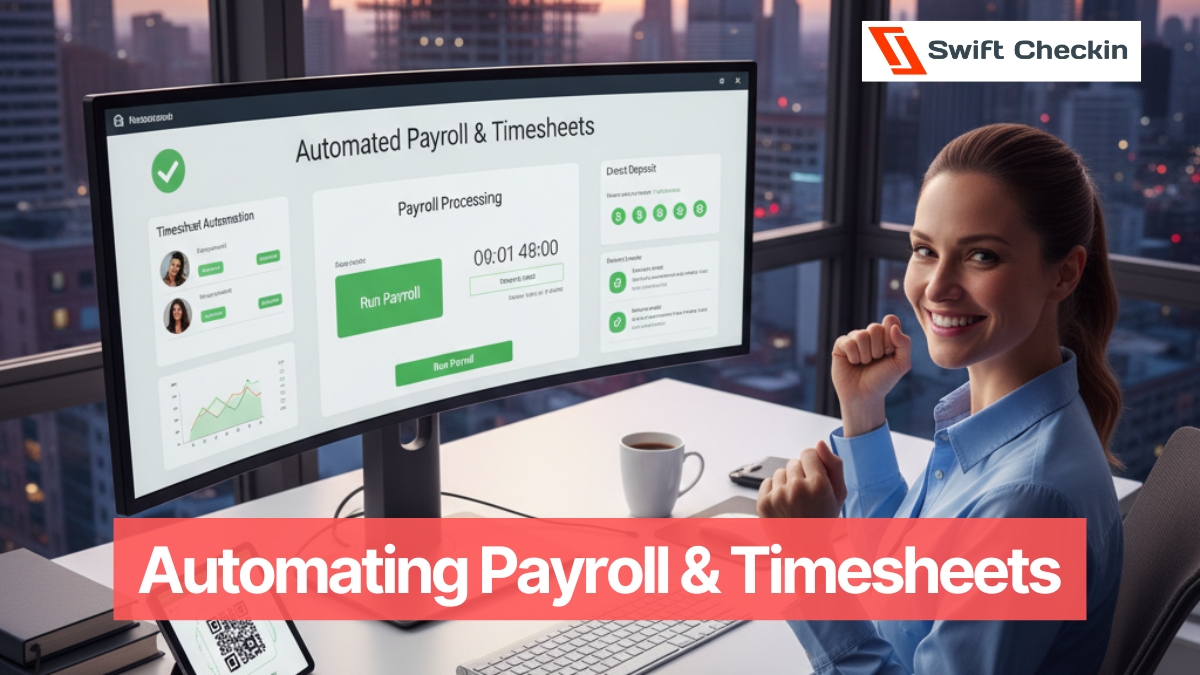
Time is the only non-renewable resource on a construction site. Yet, back-office processes routinely squander it. The manual management of payroll and timesheets is a persistent, critical bottleneck. It involves administrative burdens like paper slips, transcription errors, chasing signatures, and frantic end-of-week reconciliations. The true cost isn't just wasted administrative effort. It is quantified in compliance risk, severe project cost overruns, and diminished profitability.
Payroll automation is not a negotiable perk. It is the fundamental infrastructure required to ensure the complex, constantly shifting reality of the site accurately translates into clean, compliant financial records. The objective is clear: transcend mere compliance. Transform payroll from an unavoidable administrative chore into an efficient, data-driven system.
The Unbearable Fiscal Drain of Manual Payroll
The analog approach to processing payroll is inherently vulnerable. It carries significant, insidious costs that silently erode the contractor's margin:
- Human Error Multiplier: Data integrity collapses with every manual transfer. Whether it moves from paper to email, or spreadsheet to accounting software, the opportunity for error multiplies exponentially. A mis-keyed job code or an incorrectly applied overtime multiplier leads to mis-allocated job costing. It triggers financial reconciliation nightmares. Worst of all, it risks serious wage compliance penalties.
- Compliance Risk: Australian construction operates under the tight constraints of the Building and Construction General On-site Award 2020 (or similar EBAs). These mandates necessitate the precise calculation of penalty rates, allowances, and site-specific conditions. Manual processes struggle to apply these convoluted rules consistently. This perpetually exposes the company to hefty fines and retrospective wage claims.
- Administrative Drag: Consider the cumulative, valuable time consumed by your project managers and payroll staff. This includes the perpetual pursuit of foremen for delinquent sheets, manually calculating premium pay, fielding employee wage queries, and correcting errors across multiple systems. This non-billable time is a profound, recurring hit to your operational efficiency.
The solution is simple: eliminate the manual points of failure. Enforce automated, validated data capture directly at the source.
Automating the Data Source: From Site Flux to Financial Clarity
The payroll process initiates when a worker steps onto the site, not when the bookkeeper opens the ledger. Payroll automation must therefore be powered by high-integrity, real-time data collected in the field.
A modern time-tracking solution serves as the non-negotiable data source. You must abandon reliance on fallible paper records. The digital system demands workers log their time using a mobile application that verifies the entry. This digital enforcement achieves several critical goals:
- GPS Verification: Using the mobile's GPS the software confirms the worker's presence on the designated site at clock-in. This eradicates buddy punching and inaccurate travel time claims. It ensures every hour paid is an hour worked productively on the job.
- Immediate Job Code Allocation: The worker or foreman must assign the hours directly to a specific job code and activity at the point of entry. This foundational step guarantees that the labour cost is immediately allocated to the correct budget line. This is essential for defensible, accurate job costing.
- Supervisor Pre-Approval: Digital timesheets are instantly routed to the relevant supervisor. They can approve the hours daily, often via their mobile device. This eliminates the crippling end-of-week pile-up. It locks the data down quickly, making reconciliation swift and painless.
By ensuring the data is clean, verified, and correctly coded before it leaves the site, the platform transforms raw, messy input into a reliable, verifiable financial asset.
The Payroll Engine: Seamless Compliance and Velocity
Once the verified hours data leaves the field, genuine automation takes charge. The primary gain from integrating time-tracking with accounting and payroll software is the comprehensive elimination of manual calculation and transcription.
- Auto-Calculation of Complex Awards: The system is pre-loaded with the complex stipulations of the relevant Modern Awards or EBAs. It instantly calculates the appropriate penalty rates—the 1.5x for early overtime, the 2.0x thereafter, the Sunday premium, and all mandatory allowances. This removes manual intervention. It drastically reduces compliance risk, ensuring workers are remunerated correctly every single time.
- Instant Payroll Integration: The tedious core task of manual data transcription simply vanishes. The approved hours and associated costs flow directly from the time-tracking application into the payroll system (such as Xero, MYOB, or QuickBooks). This synchronisation not only liberates hours of administrative time, but it guarantees the payroll figures precisely match the job cost figures. This is a level of financial integrity rarely achieved with traditional systems.
- Empowering the Accountant: The accounting team shifts its focus completely. Instead of chasing field staff and troubleshooting basic errors, they dedicate their time to high-value tasks: strategic financial forecasting, variance analysis, and ensuring project profitability.
This automated process collapses the payroll cycle from several error-prone days into a few precise hours.
Case in Point: Automated Payroll with Swift Checkin
For construction firms, a truly integrated system like Swift Checkin automates the entire labour loop. It ensures unimpeachable data integrity from the moment the worker steps on site to the final payroll submission.
Here is how this automated workflow functions:
- Verified Clock-In: The worker uses the mobile app to perform a site-validated Swift Checkin. GPS confirms the precise location. The worker selects the specific job and activity code. This generates an unchallengeable, timestamped record.
- Auto-Timesheet Generation: The platform continuously converts these verified clock-in and out events into a formatted digital timesheet. It automatically flags any hours exceeding the daily standard as potential premium time.
- Real-Time Overtime Flagging: If the worker approaches 38 hours or hits the daily overtime threshold, the system triggers a real-time alert. This forces the Project Manager to make a conscious decision to approve the premium work before the expense is incurred.
- Automated Award Calculation: The system applies all relevant Australian award multipliers and allowances directly to the hours. It calculates the gross pay accurately within moments.
- Direct Payroll Export: With a simple click, the fully costed and verified timesheet data is formatted and instantly exported to the core accounting or payroll software.
This full-cycle automation eliminates administrative waste. It enforces compliance. It guarantees that the labour cost percentage reported to management is based on verifiable, current, and true costs, not dangerous guesswork.
Conclusion: From Burden to Strategic Asset
The greatest leverage point for cost savings in the construction back office lies in embracing payroll automation. By replacing complex, risk-laden manual transfers with a secure, integrated digital flow, contractors can reclaim countless hours of administrative time. They virtually eliminate the threat of compliance errors.
This pivotal shift allows the business to focus intensely on its core mission: building. When every hour worked is instantly verified, coded, and calculated with award precision, your financial records become a powerful tool for project cost control. ThiThis transforms payroll from a monthly burden into a crucial strategic asset.



