Improving Labour Cost Accuracy with Construction Time Tracking Software: Eliminating Subcontractor Disputes
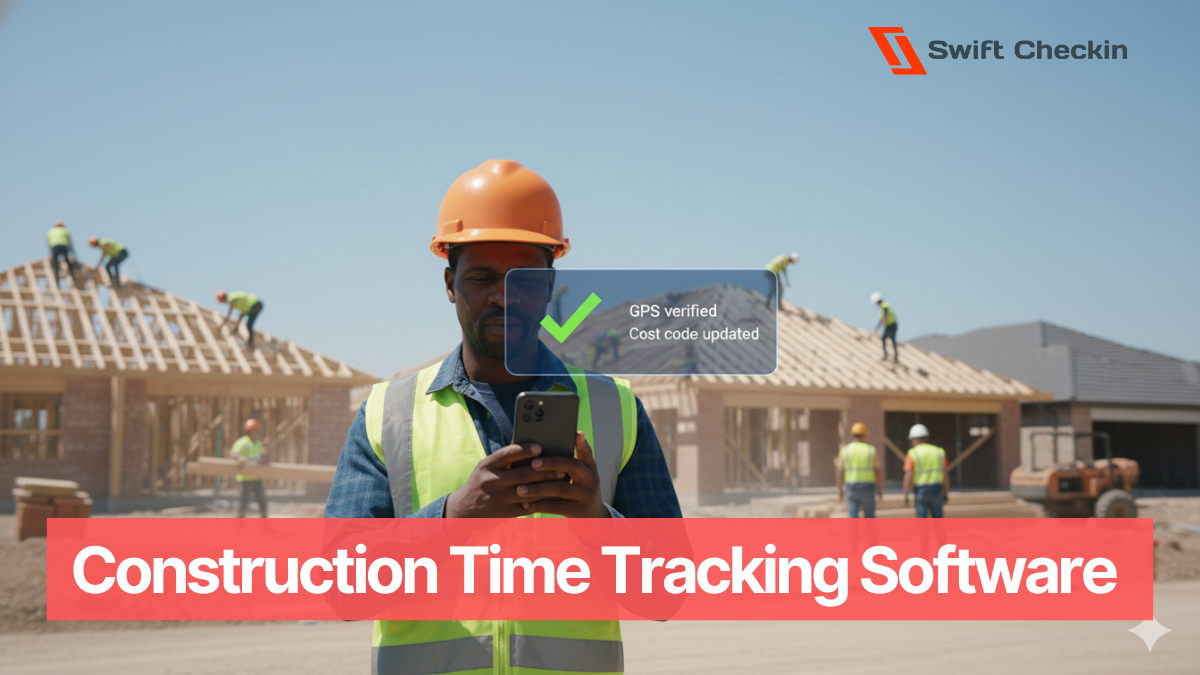
The primary engine of profit erosion in construction is not one catastrophic failure, but the accumulation of fractional errors embedded in labour costs. On any given project, labour, both internal and subcontractor, is the most volatile and most frequent source of financial dispute. Traditional methods of recording subcontractor time rely on retrospective reconciliation of paper logs or third-party spreadsheets. This is a system built on faith, not fact.
Construction time tracking software is the modern solution. Beyond recording hours accurately, it enforces a system of objective, verifiable data capture that fundamentally shifts control from the subcontractor’s invoice to the contractor’s real-time dashboard. The objective is simple. Achieve unimpeachable labour cost accuracy, making disputes over time and expense a relic of the past.
The Precision Problem: Where Labour Costs Fail
To understand the solution, one must first identify the systemic flaws in traditional subcontractor time management. These issues are rarely intentional fraud but are the result of ambiguity and poor process.
1. Inaccurate Time Allocation: The Code Crisis
Subcontractor foremen often submit time against broad, generic codes. Or, worse, use their own internal codes that do not align with your Job Cost Accounting (JCA) structure. If 20 hours of "Site Prep" actually involved 15 hours of earthworks and 5 hours of unapproved debris removal, your budget for earthworks appears on track, while you’ve unknowingly paid for non-productive time hidden within a lump sum. This error destroys the ability to perform accurate variance analysis.
2. The Unjustified Premium: Overtime and Penalties
Fixed-price contracts demand absolute control over premium time. When a subcontractor bills for weekend work at a 1.5x or 2.0x rate, the contractor must be certain that the work was both necessary and pre-approved. Without a digital trail, the contractor is left arguing against a signed timesheet, forced to pay the premium while the profit margin suffers a direct hit. The management of overtime must be proactive, not reactive.
3. The "Courtesy Rounding" Drain
It is standard practice in non-digital time tracking to round time up to the nearest 15 or 30 minutes. While seemingly small, if a 10-person subcontractor crew rounds up 15 minutes, five days a week, that is 12.5 hours of unperformed labour paid monthly. If the blended hourly rate is $65, that is $812.50 per crew, every month, taken directly from your profit. This silent leakage compounds exponentially across all subcontractors. This is a critical factor in eroding labour cost accuracy.
The Time Tracking Solution: Enforcing Accuracy at the Source
Modern construction time tracking software solves these problems by injecting objective, verifiable data directly at the point of work. The key lies in its ability to marry time, location, and cost code in a single, mandatory transaction.
1. Geo-Verification Locks the Clock
The most powerful feature of mobile time tracking is geo-verification. When a subcontractor crew member performs a clock-in, the system uses GPS and geofencing to confirm the worker's presence on the designated site.
Impact on Accuracy: This single feature eradicates buddy punching and eliminates the practice of clocking in while in transit. The contractor pays only for time spent actively generating value on the project site. This is the non-negotiable first step toward financial integrity and eliminating subcontractor disputes over presence.
If one of your sub-crews bills for 10 unverified hours monthly (due to early departures or late arrivals) at a rate of $70/hour, that's $700 saved monthly, or $8,400 annually, simply by confirming location.
2. Mandatory Cost Code Selection
The software compels the worker or foreman to select the specific cost code and activity associated with the hours before the clock-in is finalised.
Impact on Accuracy: This forces the subcontractor to align their work recording with the contractor's JCA structure. Instead of receiving a vague invoice at the end of the month, the contractor receives an hour-by-hour ledger categorized precisely to the work phase. This clean data input ensures that your internal Labour Cost Percentage (LCP) calculation is based on fact, not allocation estimates.
An error is discovered where a sub's 20 hours were mistakenly billed to a profitable WBS code instead of a rework code. Correcting this immediately shifts $1,400 of cost to the right bucket, preserving the accuracy of your Cost Performance Index (CPI) and preventing two weeks of delayed financial forecasting.
3. Real-Time Overtime and Premium Alerts
A robust time tracking software for construction serves as a powerful control tower. It is programmed with the specific limits (e.g., 38-hour week, 7.6-hour day standard) and penalty rates defined by the relevant award (like the Australian Building and Construction General On-site Award).
Impact on Accuracy: When a subcontractor attempts to clock-in outside of standard hours, the system immediately triggers a real-time alert to the Project Manager. This converts overtime expenditure from a surprise at the end of the month into a controlled, pre-authorized decision. If the PM does not digitally approve the premium time in the system, the hours cannot be paid at the premium rate, guaranteeing that you never pay for unapproved weekend or after-hours work.
A Project Manager stops an unapproved Saturday work crew (8 hours at 1.5x premium) where the base rate is $60. The system saves the company 8 hours of premium pay ($240) plus the base cost of 8 hours ($480) for a total cost avoidance of $720, simply by enforcing pre-authorisation.
Conclusion: Control through Data Integrity
In the high-stakes environment of fixed-price construction, control over labour cost accuracy is paramount. The old practice of reconciling invoices weeks after the work is completed must be abandoned. It is inefficient, risky, and actively erodes margins.
Construction time tracking software acts as the final guarantor of financial integrity. By enforcing immediate geo-verification, mandatory cost coding, and real-time overtime control, it ensures that every hour billed by a subcontractor is an hour that was verifiable for productively on the designated task. This objective data eliminates the grounds for subcontractor disputes and ensures that the financial statements reflect a profitable reality.
This transition from reactive auditing to proactive control is the only way to build systemic, predictable profitability. The system you choose must make the process so fast and mandatory that compliance becomes the default—a simple, Swift Checkin that locks the data down instantly, protecting your margin every single time.



